Center thickness & air gap measurement
The important opto-geometric parameters of any optical system include the (center) thickness of the elements installed and the air gaps between them. This is true for the visible as well as for the infrared spectral range. With short coherence interferometers from TRIOPTICS you can measure these properties in a non-contact way in production and development and thus positively influence the imaging quality of your optics.
Applications
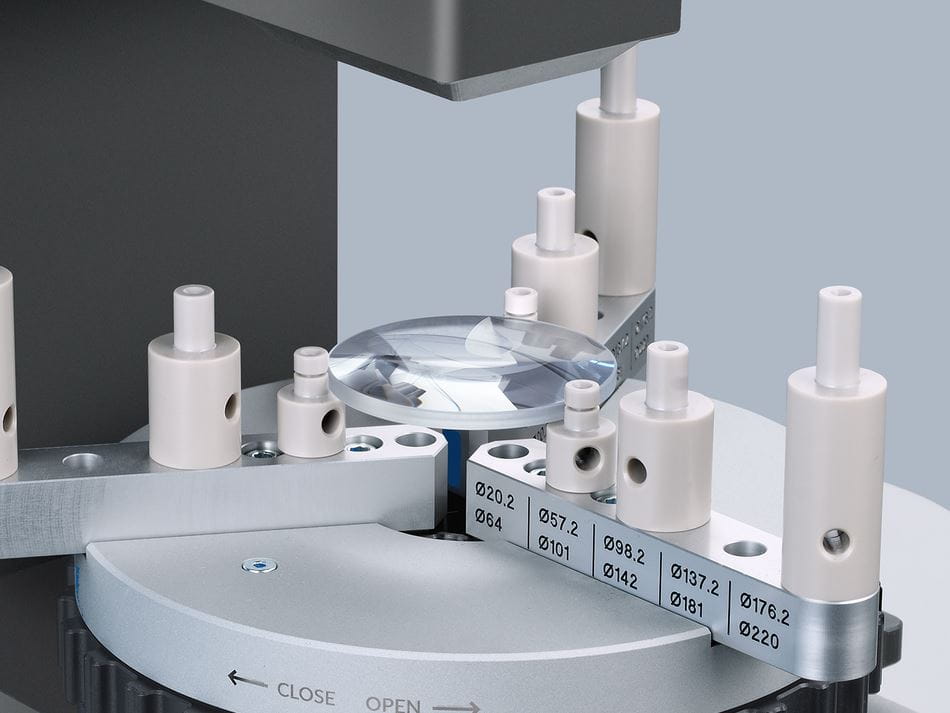
Center thickness measurement
The center thickness of the individual lens elements must be determined both for individual lenses and in the assembled lens. Our solutions allow this to be done in the development process, during production with OptiSurf® LTM when the lens is still blocked, as well as in the final quality control using OptiSurf® – then also in combination with a centration measurement.
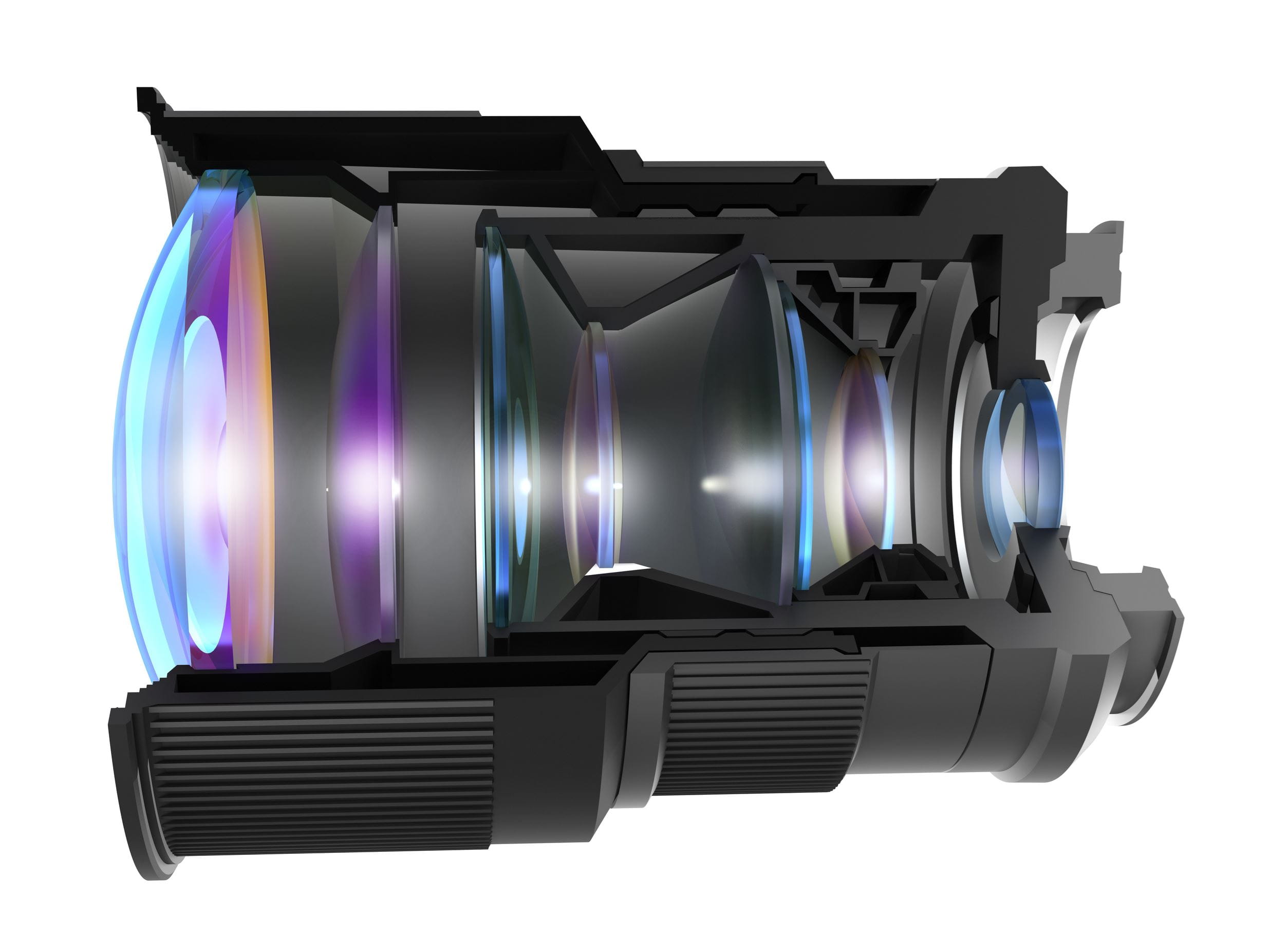
Air gap measurement
Distance is also important! More specifically, the distance between each lens element within an objective lens. This can be determined parallel to the center thickness using OptiSurf® or combined with a centration testing device via OptiCentric® 3D.
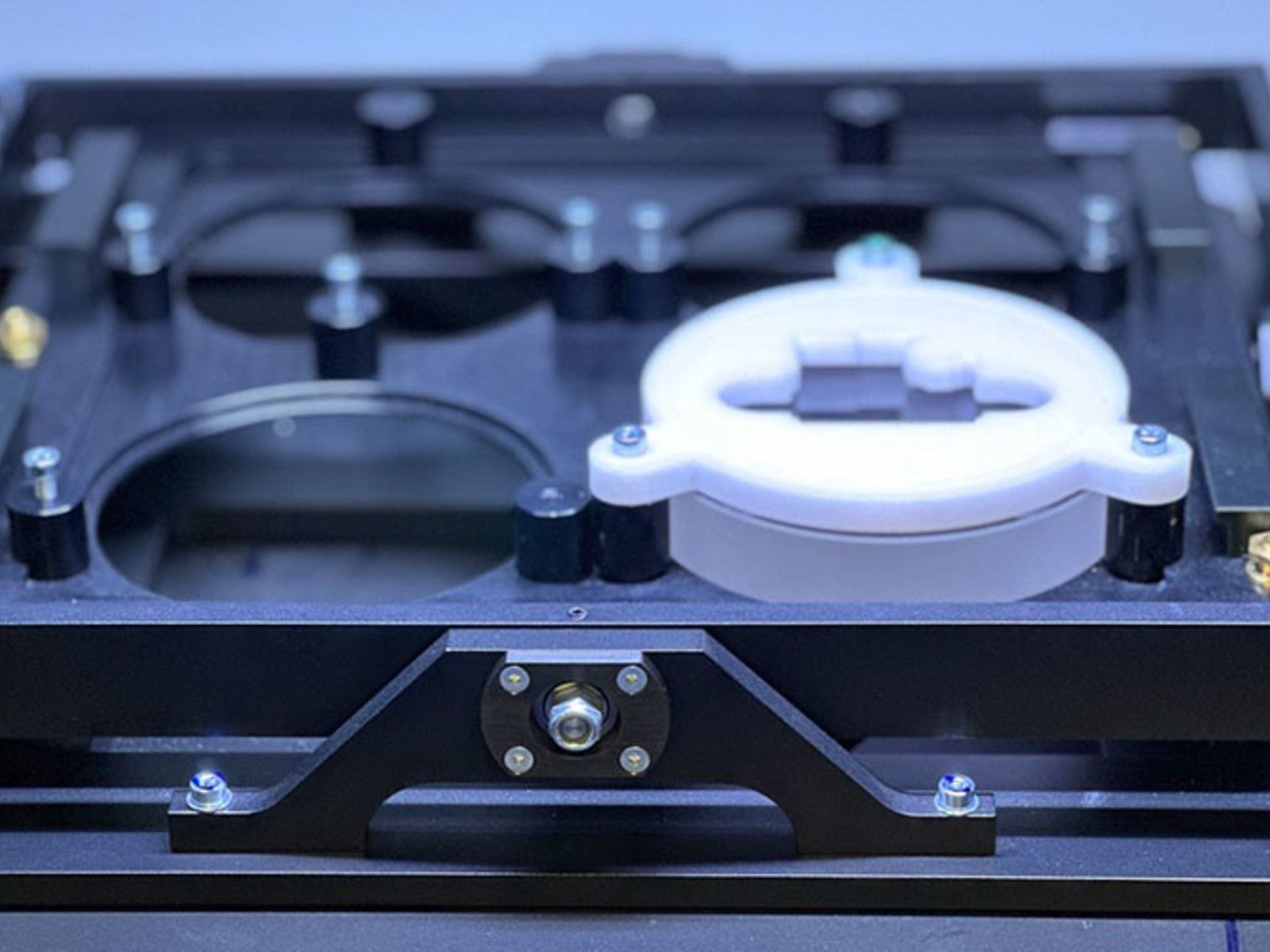
Testing geometrical properties of AR waveguide stacks and plano-optical elements with OptiSurf® PRO AR
We offer solutions for the production, development or quality control of stacked waveguides or optical elements. This includes the measurement of factors that influence the image quality, such as uneven thickness of the sample layers, air gaps and glue between the stacked layers, tilt of the layers as well as internal bow of the stacked layers.
Knowledge base
Low-coherence interferometers
Low-coherence interferometers are used in optics to measure the center thickness and air gaps of lenses against each other, in other words the positions of optical surfaces along the optical axis can be determined. As such, low-coherence interferometry is an ideal complement to centration measurement (link to centration measurement), in which the positions of the centers of curvature are determined in the x/y direction. By combining both methods, it is possible to determine the absolute position of each surface in a mounted objective lens.
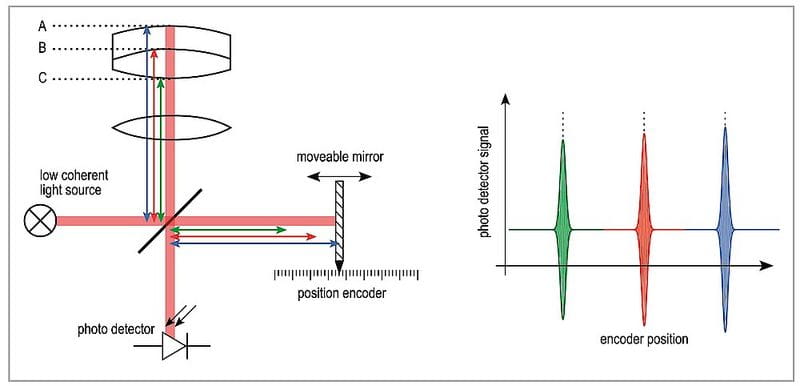
Figure 1: Operating principle of a low-coherent interferometer
Measuring principle of low-coherence interferometers
The design of a low-coherence interferometer, as implemented by TRIOPTICS in the OptiSurf®system is described in Fig. 1. The light from a low-coherence light source is divided by a beam splitter into an object beam and a reference beam. The object beam illuminates the lens system along its optical axis. A fraction of the incoming light beam is reflected back at each surface of the sample. This light is superimposed on a photo detector with the light from the reference arm. The light in the reference arm is varied by means of a delay section in the time span. The length of the reference arm is varied by means of a movable mirror, and measured using an laser interferometer. When the resulting intensity of the back-reflected reference beam and object beam are analyzed as a function of the change in length/delay of the reference arm (Fig. right) then interference patterns are always observed when the optical path lengths coincide in the two interferometer arms. Thus, the position of each surface of the sample can be determined mathematically.
The OptiSurf® measurement system is used for non-contact measurement of the geometric distance between two surfaces. This distance is calculated from the measured optical path length (OPL) and the refractive index n of the material.
d = OPL/n
The refractive index n describes the change in the speed of monochromatic light in a material compared to the speed of light in a vacuum. Since the refractive index is wavelength-dependent, the propagation speed of monochromatic light differs from that of spectrally broadened light. This results in the so-called group refractive index ng, which can be determined from the refractive index n according to:
ng (λ) = n(λ) - dn(λ) / dλ
ngGroup refractive index
n Refractive index
λ Wavelength
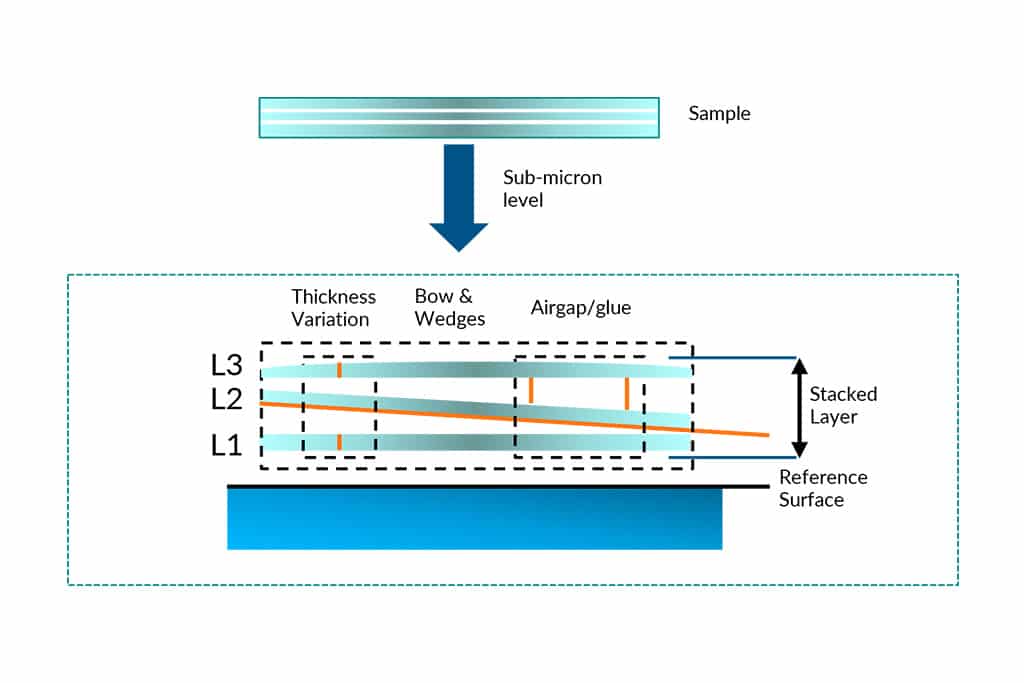
The main measurement applications of the OptiSurf® PRO AR are the following:
- Non-destructive characterization of the geometrical properties of single AR waveguides or plano-optical elements: measurement of gravitational sag, 2D thickness profile, total thickness variation, 1D and 2D wafer bow, etc.
- Non-destructive characterization of the geometrical properties of stacked AR waveguides consisting of two or more waveguides with air gaps in between: 2D thickness profile, total thickness variation, 1D and 2D wafer bow, etc. for the individual waveguides as well as 2D tilt and distance (air gap thickness) between waveguides.
Factors affecting image quality:
- Uneven thickness of layer/sample
- Airgap/glue between the stacked layer
- Tilt of layers
- Internal bow of stacked layers